
Fiber optic, contrast, phosphorescent oh my: A look at the differences between common handgun sights
Have you ever wondered why there are so many different handgun sights these days. Have you ever stared at two different pistols and thought “what’s the difference” and “why is this one more expensive than that one?” Well I’m here to tell you that those questions are common and the answer can seem a little complicated. Follow me down the labyrinth rabbit hole that is handgun sights, as I explain the basic differences between each type.
So we can agree that, generally speaking, handguns come standard with some type of sights, but did you know that there are a plethora of variations to choose from, and all those options can be quite daunting. First we have the most basic handgun sights, the contrast sights. Contrast sights, or as some of you have heard them referred to, 3 dot contrast means that the sights themselves consist of 3 white painted dots on the sights of the handgun. The traditional “picture” alignment features two white dots on the rear sight followed by a lone white dot at the front of the pistol. Now in conjunction with 3 dot contrast there are also “adjustable” contrast sights, which means the the rear sight is adjustable for windage and elevation.

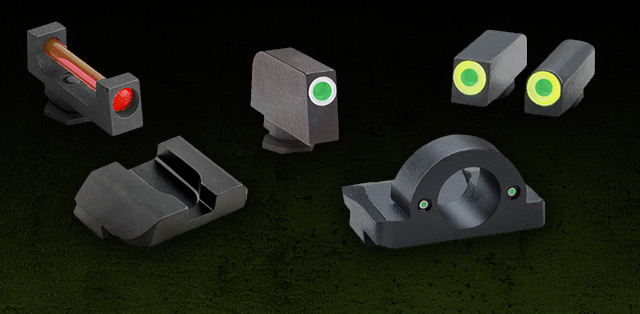
The next commonly found type of handgun sights are fiber optic sights. Fiber optic sights are essentially light pipes of different colors that allow the shooter to focus on the front sight of the gun giving them quicker sight acquisition. The fiber optic sights are generally used in competition style shooting segments where seconds count and the shooter needs to quickly find and align their sights. However, the fiber optic sights have grown beyond the competition realm and have gained support from the concealed carry market for those who wish to have a brighter front sight for much of the same reason as competitive shooters. Most fiber optic sights that come standard on handguns are green or red, although there are many more color options out there. Many popular brands such as Springfield Armory & Smith & Wesson carry handguns that come equipped with fiber optic front sights including the XD Mod.2 Service models. Shop Springfield XD Mod.2 Service Model

The next, and probably most purchased as aftermarket, are the tritium night sights. Tritium night sights are exactly what they sound like. The sights contain tritium which is a radioactive element that constantly glows. Don’t worry, there is nothing to be concerned about with the sights and their radioactive nature, it simply refers to the element and the glowing property they have. Tritium night sights can glow for an extended period of time. Most have a shelf life of about 10 years, so no worries about the sights dying on you when you really need them, although they will gradually become dimmer as the years go on. Tritium night sights can be bought aftermarket and installed, but they also come standard on many different make and model handguns from the factory, including some revolvers! Check out this Kimber K6S that comes equipped with tritium nights sights. Shop Kimber K6S on luftgewehrhandler.com!

And finally the newest craze in recent years is the addition of luminescent sights or phosphorescent sights. The difference between tritium sights and luminescent sights is that with luminescent you need a light source of some kind to activate them. Typically one can use a flashlight to charge the sights but any light source will work. Luminescent sights can vary with their duration of full charge, some can last for 20 minutes and some can can last for as little as 5 minutes. It depends on what type of luminescent property is being used. In order for the sights to work in lowlight areas, they must be charged first whereas your tritium sights always glow. The NEW Walther PPQ Subcompact Limited Edition comes with luminescent sights.

I know that this is a lot of “illuminating” information (ha ha) and many new shooters can feel overwhelmed at the thought of all the technical aspects of different firearm types and trying to decide which one suits them best. When it comes down to it all you have to decide is what are you going to use the handgun for; from there you can delve into what sights would work best for you. For example a handgun for home defense would benefit from having tritium night sights in the unfortunate situation that you need to use the gun in the dark. When considering options for home defense, a flashlight or a weapon mounted flashlight can also be beneficial to help aid you in those dark areas. For outdoor target practice you might consider fiber optic sights that glow bright from the sun to help aid you with your sight picture. Either way, it is a good idea to consider all your options and decide what is best for you and your application. Should you have any questions feel free to reach out to the gun enthusiasts here at Gunbuyer and they’d be happy to assist!
Pictured below (Left to Right): 3 Dot Sights, Luminescent Sights, Tritium Night Sights


Credit: M. Horzepa


Add Comment